
1
Apollo
What it removed
The wait for tooling, a design didn't need to be finished before it could be made.
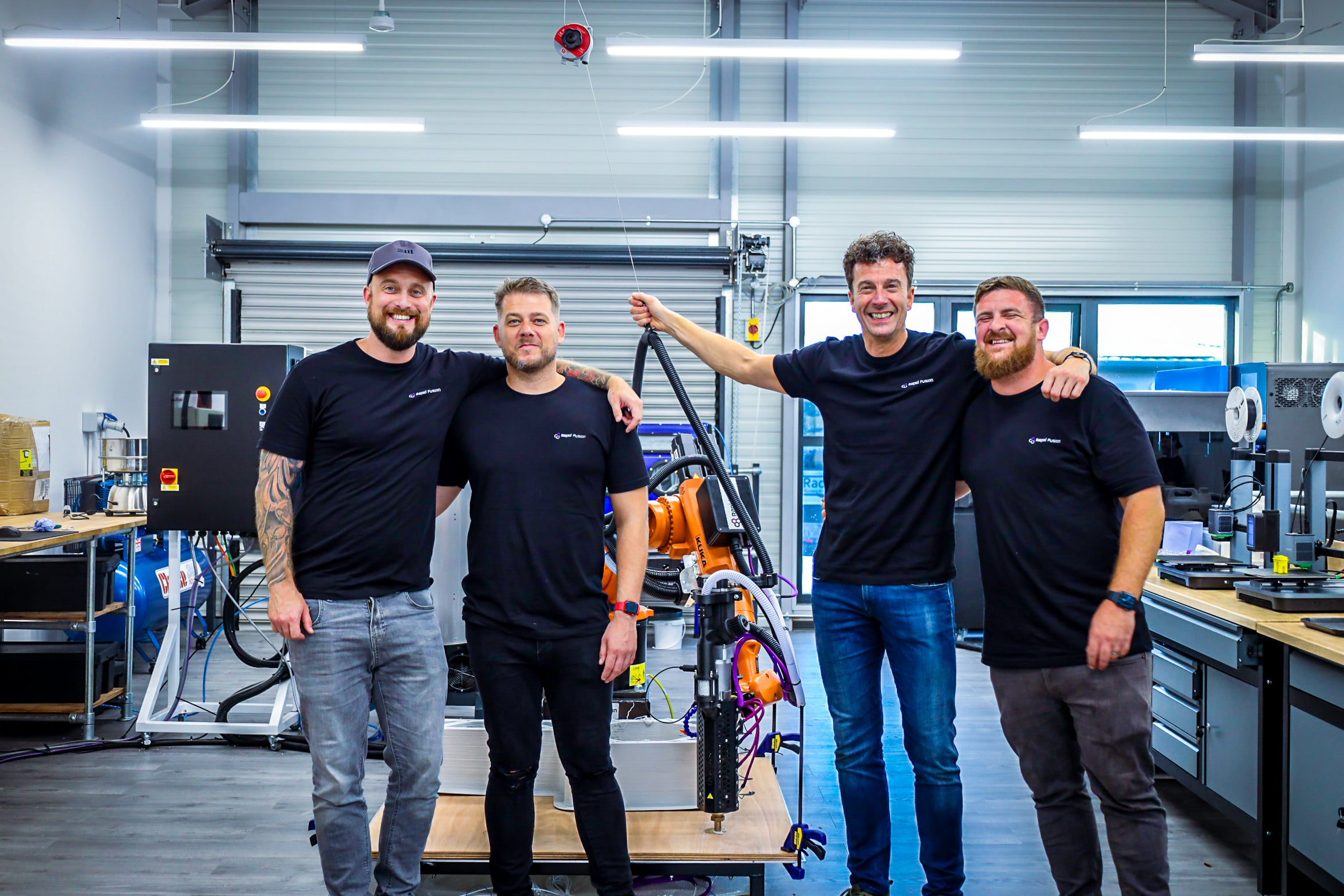
The Problem We Kept Running Into
Ambitious designs die in a specific, predictable place: the gap between a working prototype and a manufacturing process that can actually produce it, at the size it needs to be, the volume it needs to reach, and the pace the rest of the programme is moving at.
Desktop 3D printing couldn't reach the scale most industrial parts need.
Traditional manufacturing could reach that scale, but not without months of tooling lead time, and a design that had to stop changing before it could start.
For anyone building something genuinely large, there wasn't a process built for both. That gap is where Rapid Fusion started.

Where It Actually Started
The idea wasn't drawn up in a design studio. It was sketched on the back of a cigarette packet, built around one specific ambition:
A large-format printer simple enough that anyone in the business could run it, not just the engineer who built it.
If someone with zero engineering background could walk up and operate it without a manual open in front of them, we reckoned we'd built something genuinely usable, not just genuinely impressive. That test; could someone outside engineering run this has stayed part of how we design equipment ever since.
Founded on a Bet Others Were Willing to Back
We spun out of EVO 3D, an established 3D printer reseller, on the belief that large-format additive manufacturing could be made robust and precise enough for real industrial production, not just oversized prototyping.
It wasn't a belief we held alone. Innovate UK backed the thesis directly, and when we built our production-scale platform, we did it alongside Rolls-Royce and the National Manufacturing Institute Scotland, organisations with no reason to put their name against an unproven idea unless they thought the problem was real.
For the full timeline of grants, launches and milestones, see Our Journey.
What We Built, and What It Made Possible
Each platform exists to add one capability on top of the last, rather than solve the same problem four different ways:
Built to Work as One Ecosystem
Alongside the hardware, we built what makes it usable at scale: our Epicurus software suite and AI print assistant, a materials library suited to real industrial environments, and in-house tooling capability, so a customer never has to hand a project to a second supplier just to get it made repeatably.
How We Still Work Today
We don't think of ourselves as a print bureau, and we try not to act like one.
That's true whether we're producing for a customer directly or supporting them running their own machine — and it's true across every industry we work in: aerospace and defence, marine, automotive, and construction.
Built in the UK, Growing Beyond It
Every Rapid Fusion pellet extruder and large-format robotic 3D printing cell is designed and manufactured in the South West, a deliberate choice that keeps design, engineering, and production close enough together that when something needs to change, it can change fast.
From there, we've grown into a genuinely international network.
Where This Goes Next
The gap we started with hasn't closed for everyone yet, plenty of ambitious designs are still stalling somewhere between prototype and production. We're still building against that, on both sides of the relationship: platforms for customers who want the capability in-house, and manufacturing support for those who'd rather we carry it.
However a customer needs to work with us, that's the version of Rapid Fusion we intend to be there for.
Want to Talk to Us?
Whether you're exploring whether large-format additive manufacturing fits your problem, evaluating one of our platforms, or want us to simply make the part, we'd like to hear from you.